Monday, June 1, 2015

Translocation: Food glorious food!

4:41 PM
labeled for reuse link
Last post we talked about transpiration, which involved the movement of water around the plant.
Now it's time to talk about the movement of other things in plants. By things I mean minerals and ions, such as glucose and other sugars.

So to start off we need to understand what sources and sinks are. A source is any part of the plant that produces more "food" (glucose usually) than it uses. Sources tend to be leaves and the stems of plants. It can also be roots and/or tubers if they are releasing their storage. A sink is any part of a plant that uses more glucose than it makes. This can be any growing part of the plant including the stem, leaves, roots, and/or tubers.

The process of translocation takes place in the phloem of a plant. This is made up of sieve tube members (elements) and companion cells. The sieve tube member is the structure that actually "does" the translocation. And beside each of these members resides a companion cell. These companion cells serve as, well, servants for these members. Sieve tube members lack a nucleus, and have very little cytoplasm. The companion cells support the sieve tubes, as they have a nucleus and have dense cytoplasm. The sieve tube members are all connected, and attach to each other "end-to-end". In-between each sieve tube is a sieve plate which is perforated (has holes, like Swiss cheese).

Alright now let us begin. We start off at a source. There a process called phloem loading occurs. This is essentially the process of dumping all the glucose from the source into the phloem. This requires active transport mechanisms, especially at the end when the concentration of glucose is much greater in the phloem than in the source. I should probably mention that the phloem and the xylem are very close to each other, only separated by the cambium. The increased concentration of solute in the phloem results in osmosis of water from the xylem to the phloem. The combination of the high concentration of glucose and water at the source area of the phloem creates high turgor pressure at the sink, and lower turgor pressure at the sink. As things move from an area of high pressure to low pressure we see a movement of the sap to the sink.

Once at the sink the carbohydrates are removed from the phloem, this could be partially passive, however, at least part of it will require active transportation. Now our phloem is back to having a low concentration of carbohydrates. The water remaining in the phloem will now diffuse (via osmosis) back to the xylem. Because now the ion concentration in the xylem is higher than the concentration of carbohydrates in the phloem.

And there we have it. You should all now be experts on the topic of transpiration and translocation.

Tea: Have yet to make one. I might have some lipton camomile later.

Transpiration: How Plants Defy Gravity, among other things

4:25 PM
labeled for reuse link
Plants. Yup plants. I actually just heard that a scientist hooked up a plant to a lying machine, and supposedly showed that they can faint from pain. Think about that next time you eat a salad. Just a bowl full of passed out lettuce. Bon Appetit.

But that is not what we are here to learn about. As usual I digress. So transpiration. The process starts off in the roots of plants. So extend your mind beneath the soil. You there yet? Alrighty. As you probably know soil is rich in minerals. If you didn't you know now. So, in the roots of the plant these minerals are actively transported into the roots. It is active transport because there are more minerals in the roots than there is in the soil. If you've forgotten, active transport is the movement of substances against the concentration gradient. So now that we have a high concentration of ions in the roots we can get water to come into them via osmosis. Remember, osmosis is the movement of water molecules, across a semipermeable membrane, from an area of low solute concentration, to an area of high solute concentration. So now the picture comes together. The active transport of minerals into the root allow for the passive movement of water molecules into it.

Step one complete. Now that the water is in the root of the plants it will enter the xylem. Xylem is tube like structure that brings water and minerals up to the leaves of the plant. It can only go up, not down. The xylem is made up of dead cells called parenchyma and sclerenchyma. The structures themselves are known as tracheids and vessel elements. Now the water enters the xylem. Following the law of gravity the water would just remain there, it would fall. Like the apple on Newton's head. But due to two concepts called adhesion and cohesion, water is kept in a line going up the xylem. Cohesion is an attractive force between two or more like molecules. Whereas, adhesion is an attractive force between two unlike molecules. So we see adhesion between two water molecules, between a negatively polarized oxygen atom of one water molecule and a positively polarized hydrogen of another water molecule. This keep them in a straight line. Adhesion, occurs between water molecules and the walls of the xylem. This also keeps them in a line. Like good school children.

This still doesn't explain why water moves against gravity! You cry in frustration. Never fear, your answer is near. Not rhyme intended. It just sort of happened. Well in the leaves of a plant we have small pores called stomata. These stomata open in order to let carbon dioxide in (to conduct photosynthesis) and to let oxygen out (waste product of photosynthesis). However, these open pores also result in the evaporation of water (called transpiration/evapotranspiration). This force of transpiration pulls on the stream of water molecules, as they evaporate out of the plant.

And there you have it. That is how plants defy gravity. You can't say the same I'm afraid.

The Light Independent Reaction (and you thought we were done)

3:03 PM
labeled for reuse link
I'm actually serious. We are done. After this post, you will know the process of photosynthesis in its basics. Although, I might still write another couple, to sum it up a little more cohesively. Also if you can't learn in paragraph form, I sincerely apologize... On with the show! I should probably mention that the goal of photosynthesis is to make glucose... Yeah sorry about that.

We now move from the grana to the stroma of the chloroplast. Fun stuff. There we meet the Calvin Cycle. Not the Krebs Cycle. Don't get the two mixed up. I know I do. CALVIN CYCLE. Wonderful. Now we can move on. As we established with cellular respiration a cycle means it is continuous. This time, however, it is not oxaloacetate that we start off with, but a molecule called Ribulose Bisphosphate (RuBP). Unless unlike oxaloacetate it is a 5 carbon compound. Then in a process called carbon fixation, a CO2 molecule binds with RuBP. This reaction is catalyzed by enzyme RuBP carboxylase (Rubisco for short).

This creates a highly unstable 6 carbon molecule, which immediately splits into two 3 carbon molecules called glycerate-3 phosphate, GP (not G3P, which is glyceraldehyde 3 phosphate and what we made during glycolysis). GP is then reduced by NADPH and ATP (old friends from the light dependent reaction), which ultimately gives us a different 3 carbon molecule called TP (triose phosphate). TP now faces the most important decision of its life. To leave home (the cycle) and become a sugar phosphate (such as glucose), or follow in his father's footsteps and convert back to a RuBP molecule. Most TP molecules don't have the guts to leave the comfort of home and are thus converted back into TP with the help of ATP. And thus the cycle begins again.

Ta for now.

Sunday, May 31, 2015

Here we go again: step 1, light dependent reaction.

4:00 PM
Labeled for reuse link
As the name implies, in this stage of photosynthesis, light is needed. Duh.

Alrighty, well this process takes place in the chloroplasts of cells. You don't have chloroplasts, just a little by the way. Unless you're a plant... In which case, I guess I was under a rock when we figured out how to communicate with plants. Welcome fellow living things.

So this process takes places in the grana of the chloroplasts, which are stacks of thylakoids. These thylakoids have electron transport chains embedded into their membranes. The system gets kicked off in photosystem II of the electron transport chain. Yes. Photosystem II. Not one. It's not a typo. Photosystem II has two chlorophyll a molecules, which are a type of pigment. They also have a primary electron acceptor. Here's where the sun comes into play. A photon of light from the sun is captured by one of the pigment molecules inside Photosystem II, it is then passed along (like a hot potato) from one pigment molecule to the next, until it reaches one of the chlorophyll a molecules. The photon then proceeds to excite the electron of chlorophyll a to a higher energy level.

Backstep. The chlorophyll molecule's electron comes from a process called photolysis. Whereby water is split (using light), this results in two hydrogen ions and one oxygen atom. The two electrons on the hydrogen ions are handed over to two chlorophyll a molecules in photosystem II. The oxygen atom waits until this process happens one more time, bonds with the resulting oxygen, and leaves as a waste product.

Back to our negative friend the electron. This excited electron is captured by what is called the primary acceptor. From there it moves down the electron transport chain, first to a plastoquinone (PQ), then a cytochrome complex, and then another PQ. As the electron moves down the chain it loses energy, this energy is then used to undergo chemiosmosis. i.e. hydrogen ions are pumped into the thylakoid space, building up a high concentration of hydrogen ions in the thylakoid. These hydrogen ions then want to get out of the thylakoid to the lower concentration, they can only do this through the ATP synthase channel. Where they pass through and the energy released by them going through there is used to phosphorylate (photophosphorylate) ADP into ATP.

The electron then enters photosystem I, and is once again excited. It is once again captured by a primary electron acceptor. This electron is once again passed along another electron transport chain, and there ferrodoxin is used as the energy carrier. The energy created by passing along this electron is now used to reduce NADP+ to NADPH. An enzyme called NADP reductase catalyzes the movement of the electron from ferrodoxin to NADP.

Essentially, the whole point of this yet another lengthy process was to end up with ATP molecules and NADPH to be used in the light independent reaction.

Finally, we've made it. The electron transport chain, and chemiosmosis

3:40 PM
Labeled for reuse link
Just one more stretch. You can do it. Take a big breath. Open your mind. And grab a cup of tea (I had Lipton camomile).

So this is where the big guns are taken out, this is were 32 of the 36 ATP molecules are produced. The electron transport chain also occurs in the mitochondria, however, it doesn't occur in the matrix it takes place in the inner mitochondrial membrane and cristae membranes. 

These membranes have carriers within them, which have the property of being easily reduced and oxidized. So that's kind of neat. For the sake of simplicity all of these carriers are known as cytochromes, except for CoEnzyme Q. The electrons are passed along the electron chain from one carrier to another, due to an increasing electronegativity. 

The electrons that are passed down this chain are donated by our electron carriers NADH and FADH2. 

FADH2 enters the electron chain at a later stage, and the does not produce as much ATP. 

Each NADH molecule will produce 3 ATP molecules
Each FADH2 molecule will produce only 2 ATP molecules 

As the electrons are passed along the chain they lose energy. Oxygen is the last electron acceptor, this is due to it's relatively high electron negativity. Thai oxygen molecule then bonds with two hydrogen atoms to form water. 

As the electrons are passed along they release energy. This energy is used to pump hydrogen ions out of the matrix into the intermembrane space. This results in a very concentrated area of hydrogen ions in this intermembrane space. 

This process involving the movement of hydrogen ions is called chemiosmosis. 

These hydrogen ions then want to move from this high concentration back to into the matrix, however they can only do so through ATP synthase. The hydrogen ions passively move through this channel (facilitated diffusion). As they move through the channel the enzyme uses this energy to phosphorylate ADP to ATP. This type if phosphorylation is called oxidative phosphorylation, because it utilizes the electron transport chain. 

And thus ends our journey through cellular respiration. Up next. Photosynthesis. Yup. There's more. 

The Krebs Cycle (it's a never ending one too)

3:36 PM
labeled for reuse link
We've finally arrived. Well technically we were already in the matrix during the link reaction. But anyway. We're back!

As is implied by the name this is a cycle. And what does that mean? Well, it repeats itself... I'm hoping you have a pretty clear idea of what a cycle is... If not, well I can't really help you. 

Alrighty then, moving around this cycle is a 4 carbon molecule called, oxaloacetate (I'll be quite surprised if that's spelled correctly...). So one of the two Acetyl CoA molecules we made during the link reaction will enter the Krebs cycle. There it will combine with an oxaloacetate molecule to form a 6 carbon compound called, citrate.

Citrate will then be oxidized and decarboxylated. The decarboxylation will create a CO2 molecule, and a resulting 5 carbon compound. The oxidation will cause the reduction of another NAD+ molecule to form NADH. 

This will happen one more time, to create a 4 carbon compound, another NADH, and another carbon dioxide molecule. 

The 4 carbon compound will now undergo further modification and oxidation. This will result in another NADH molecule, the reduction of coenzyme FAD to form FADH2, and the reduction of ADP to form ATP. 

All these steps help us bring this 4 carbon compound back to the original oxaloacetate. 

The cycle then begins again. 

Also keep in mind that this cycle will run twice for every one glucose molecule, because we produce two molecules of Acetyl CoA. 

So with this in mind, these are the products of the Krebs Cycle: 
2 ATP molecules
6 molecules of electron carrier NADH
2 molecules of electron carrier FADH2
4 molecules of CO2 

In total we have a net gain of 4 ATP molecules, out of the 36 total. 
We have 10 NADH molecules (2 from glycolysis, 2 from the link reaction, and 6 from the Krebs cycle) 
And finally we have 2 FADH2 molecules. 


Hope this was informative. Sorry if it wasn't. Next step, the electron transport chain and chemiosmosis.

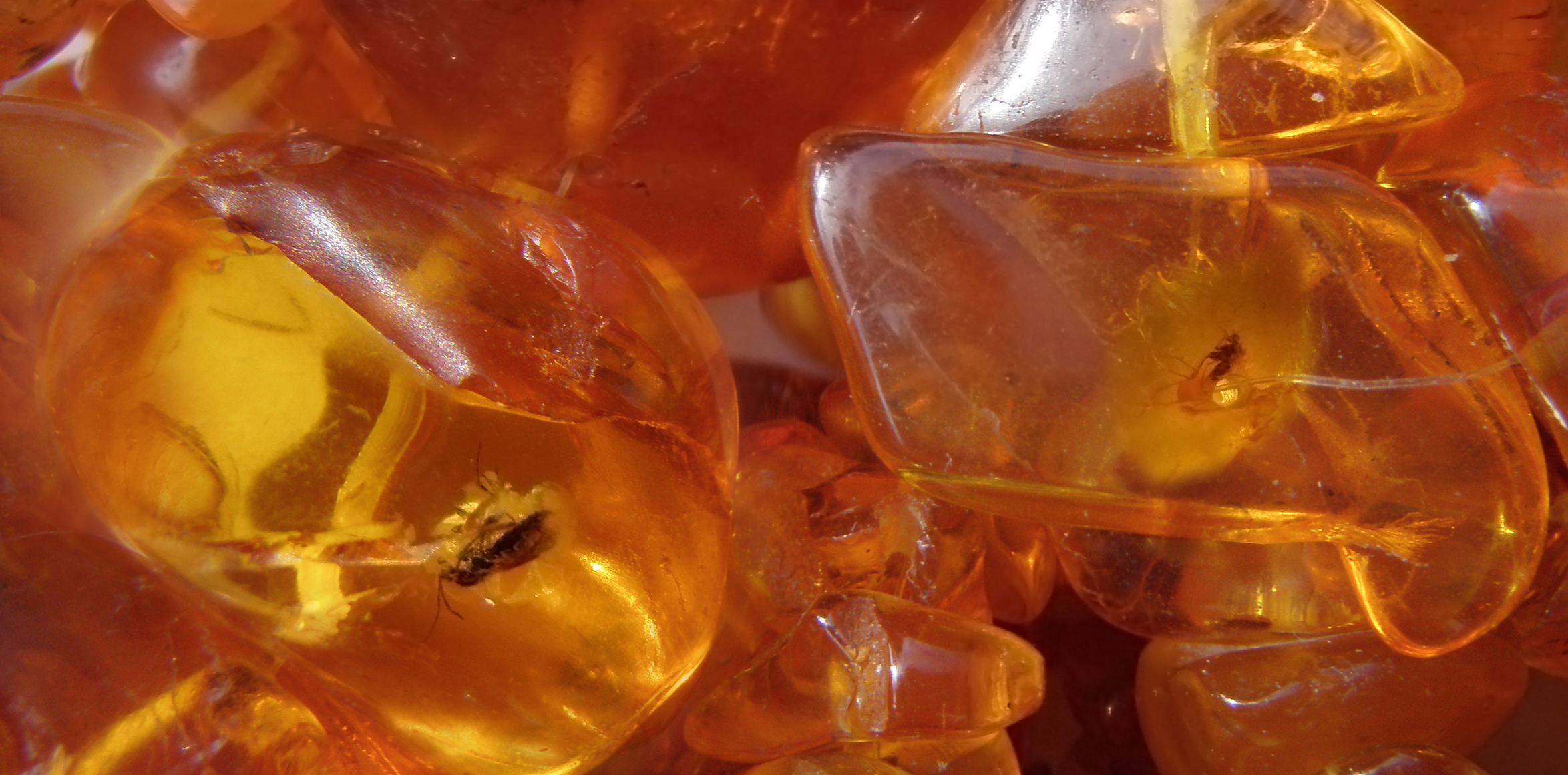
PS: You'll get the featured image if you know german :)

Saturday, May 30, 2015

The Link Reaction "Moving to a new world"

5:29 PM
Labeled for reuse link
Excuse the dramatic and nonsensical title.

Now many people might neglect our friend the link reaction, but lucky for you, I am not one of those people. So yay. I guess. 

Let's get started shall we? Well our two friends pyruvate now enter the mitochondria of your cell, fun stuff right? There they decarboxylated (lose a carbon), to form a 2 carbon acetyl group. 

This carbon bonds with O2 to form CO2. This waste gas is released, to wreak havoc on our atmosphere. Also fun stuff. Yeah. Not really... But I digress, the acetyl group is now oxidized. 

Oops, side note. Redox reactions. They are more complex than I'm about to describe them, but for now this is all you have to know. Or all I'm going to tell you. Remember these two words, OIL RIG. Got it? Good. 
Oil stands for: oxidizing is losing
And rig stands for: reduction is gaining. 
Now what do I mean by that? Well oxidizing is losing hydrogens and electrons and gaining oxygen, and reduction is gaining hydrogens and electrons, and you guessed it, losing oxygen. Also important to note, if something is reduced something else was oxidized. In other words, they always happen together. 

Back to the link reaction. The acetyl group is oxidized forming reduced NAD+. And reduced NAD+ is NADH. 

Finally the acetyl group combines with coenzyme A (CoA) to form Acetyl CoA. 

Also, remember this process happens twice, because there are two pyruvate molecules produced for every one molecule of glucose. 

In summary (what is produced in the link reaction) 
No ATP produced 
2 NADH molecules
2 Acetyl CoA

In summary (what have we produced in total thus far)
4 NADH molecules 
2 ATP 
2 Acetyl CoA 

Aerobic vs. Anaerobic Respiration (I realize you probably don't care)

3:07 PM
Labeled for resuse link
Hello again. Back to the world of biology. Whether or not that pleases you, I don't know. Anywho. My last post introduced you to the fine-art of glycolysis. If you still don't understand it, well, reread the blogpost? Otherwise Khan Academy is pretty darn amazing.

Anyway. As I said earlier glycolysis occurs in both aneorobic and aerobic respiration.  I should probably clarify that with aneorobic respiration there is no available oxygen, with aerobic respiration there is. So as we all now know, the products of glycolysis are: 2 pyruvate molecules, 4 ATP (for a net gain of 2), and 2NADH molecules. 

In aerobic respiration the two pyruvate molecules and the NADH will proceed to the link reaction, then Krebs cycle, and finally the electron transport chain. I did warn you it was a complex process... 

In aerobic respiration there will (in an ideal world- which isn't often the case) be a net production of 36 ATP molecules. 38 if you don't subtract the two ATPs needed to start the process during glycolysis. 

However, in anaerobic respiration only 2 ATP molecules total will be produced. Nonetheless, the pyruvate molecules will be further modified, for no additional ATP. Don't ask me why. I'm sure there's a valid reason... Anyway, if you happen to be a yeast cell, which would be interesting to say the least, you will convert the 3 carbon pyruvate into ethanol. Since ethanol is a 2 carbon compound, we know that pyruvate was decarboxylated to create ethanol. All in all you produce ethanol and CO2, because of the decarboxylation. I kind of like that word.

If, by the off chance that you are not a yeast cell, but an animal of some sort, you will convert pyruvate into lactic acid (also known as lactate). This is also a 3 carbon compound, so no carbon dioxide is produced. This tends to happen if you have insufficient oxygen during a period of intense exercise. This process also occurs in the cytoplasm, and also results in a net gain of two ATP. 

Hehem. Part 2, of the very long, and laborious process of cellular respiration. Also, might I add that the process I am describing is a simplified one. There's actually even more to this than I'm explaining... So yeah. Next step, the link reaction.